
Quality & compliance
Quality, testing and
Indian compliance.
Know which regulator applies, who holds the licence and which tests to plan, before you spend on a batch.
What a product has to pass
- MicrobiologyPlate counts and pathogens
- ContaminantsHeavy metals and mycotoxins
- StabilityShelf life in Indian heat
- RulesThe right regulatorOpen
By category
Who regulates what
A starting map, not legal advice. Rules are amended often, so we confirm the current text for your product.
| Category | Regulator and law | Licence holder | Key tests |
|---|---|---|---|
| Food and beverage | FSSAI: Food Safety and Standards Act 2006, Licensing Regulations 2011, Labelling and Display 2020, Claims 2018 | The manufacturer or co-packer, through FoSCoS | Total plate count, yeast and mould, coliforms, E. coli, Salmonella, S. aureus; heavy metals; aflatoxin; pH and Brix |
| Health supplements | FSSAI Nutraceutical Regulations 2016 and later amendments. Novel ingredients may need non-specified food approval | The brand owner or manufacturer | Assay of actives, label claim against RDA, microbiology, heavy metals |
| Cosmetics | Drugs and Cosmetics Act and Cosmetics Rules 2020; BIS IS 4707 as the reference standard | The manufacturer, with the State Licensing Authority | Microbial limits, heavy metals, preservative efficacy, stability |
| Ayurvedic and herbal | Drugs and Cosmetics Rules (Ayurvedic provisions), Schedule T GMP, Ayurvedic Pharmacopoeia of India | The manufacturer, with the State Ayush authority | Pharmacopoeia monograph tests, microbiology, heavy metals, pesticide residues |
| Biofertiliser and biostimulant | Fertiliser (Control) Order 1985. Biostimulants sit under Clause 20C and Schedule VI (2021) | The manufacturer, with the State Agriculture Department | Viable count (CFU), contamination, pH, moisture; bio-efficacy trials; toxicity data for biostimulants |
| Biopesticide | Insecticides Act 1968; registration through CIB&RC | The registrant or manufacturer | Strain identity, bio-efficacy, toxicology |
| Devices | Medical Device Rules 2017 (Class A to D), ISO 13485 as a quality system | The manufacturer or importer | Depends on the device class |
Last reviewed: November 2026
Typical test parameters
What labs usually measure
Microbiology
Total plate count, yeast and mould, coliforms and named pathogens. Limits differ by product, so we read the current standard for your category.
Heavy metals
Lead, arsenic, cadmium and mercury, usually by ICP-MS at a testing lab.
Mycotoxins
Aflatoxin and related toxins in grains, nuts, spices and botanical raw material.
Viable count
For probiotics and bio-inputs: live CFU at manufacture and at the end of shelf life.
Stability
Physical, chemical and microbial change over time, under planned storage conditions.
What we do
- ✓ Prepare regulatory pathway notes for your category.
- ✓ Draft documentation for the licence holder to review and file.
- ✓ Review labels and claims against the current rules.
- ✓ Plan the test panel and read the results with you.
- ✓ Design stability studies for Indian climate.
- ✓ Book NABL-accredited labs per project.
What we never claim
- ✕ We do not say a product is “FSSAI approved” by us.
- ✕ We do not certify products.
- ✕ We do not promise a licence.
- ✕ We do not call Vardhnova accredited. Accreditation belongs to the labs that hold it.
- ✕ We do not promise how fast a regulator will act.
In one line: we prepare FSSAI-aligned documentation. The licence holder files it, and the authority decides.
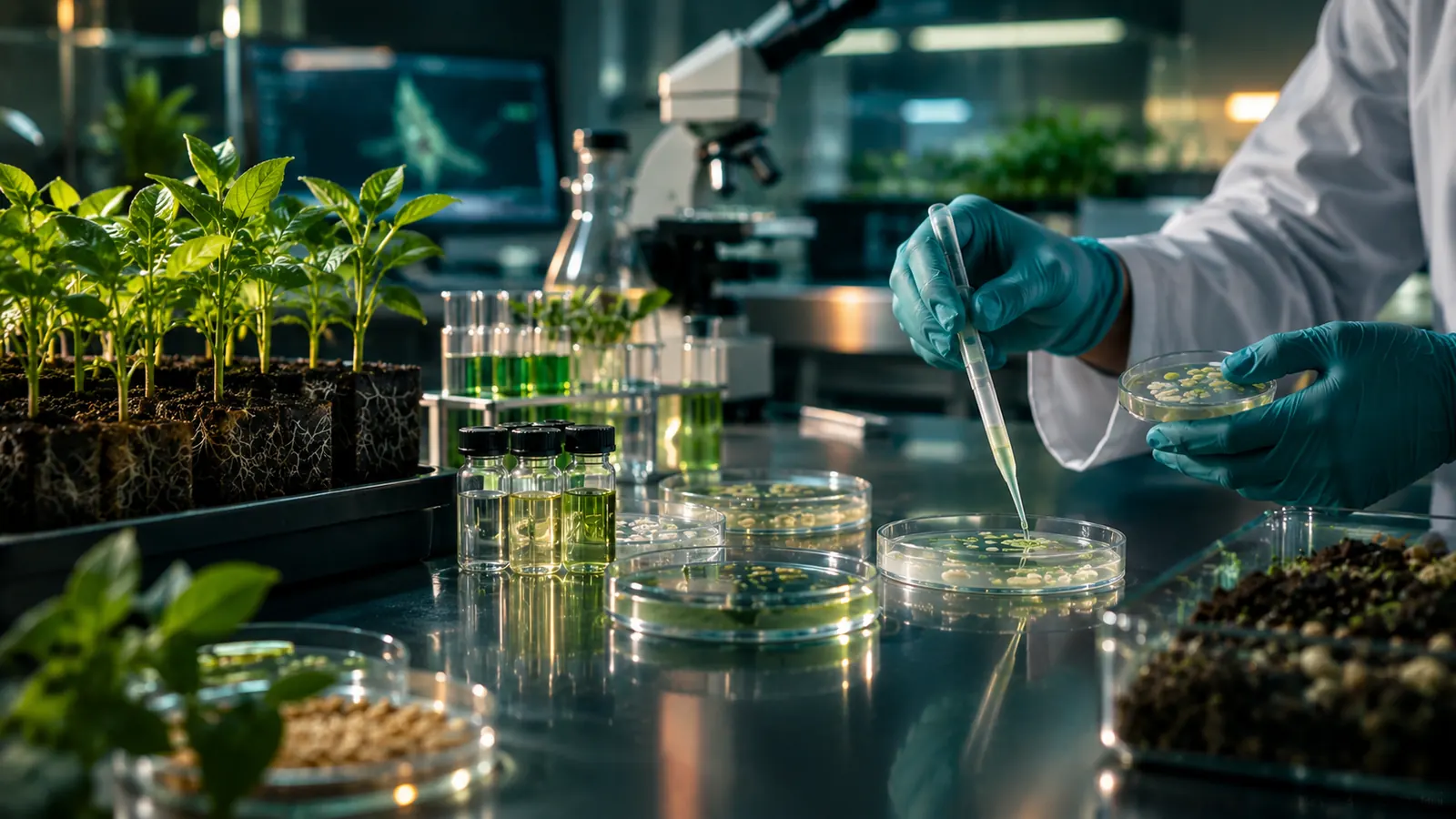
Sample handling and quality checks
NABL testing
The right lab for each test
Vardhnova has no in-house lab. Bench work runs through our domain-expert network and the R&D labs they work in. Tests that need an accredited report are booked at NABL-accredited labs per project, and you pay for only the tests you need. You can check any lab’s scope on the NABL website.
Shelf life
Stability in Indian climate
India falls largely in ICH Climatic Zone IVb: hot and humid. Long-term studies use 30 °C and 75% relative humidity. Accelerated studies use 40 °C and 75% relative humidity. We design the study, and in-silico forecasting helps you choose what to test, so fewer samples go into the chamber.
Next step
Plan the tests before you pay for them.
Onboarding is ₹4,999 with a digital NDA. In-silico modelling starts at ₹15,000. Lab work is pay as you go. QC and testing questions go to our Co-Founder & QC Chemist at kalash@vardhnova.in.